₹25000
Tex benefit: 50%
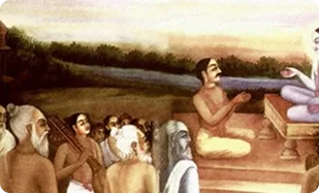
Shrimad Bhagavat is a mahāpurāna (monarch amongst religious scriptures), which describes the divine eternal tales of the 24 incarnations of Lord Vishnu. It focuses on the tales of Lord Krishna with emphasis on love towards God and getting rid of grief, attachment and fear.
Shrimad Bhagavat consists of 12 cantos, 335 chapters and 18,000 ślokas (verses) which describe devotion, incarnations of Lord Vishnu and the biographies of great devotees who have followed the path of devotion.
This divine scripture was narrated by the Supreme Lord to Lord Brahma; Lord Brahma narrated it to his son Sage Narad, who in turn narrated it to the great Sage Shri Ved Vyas ji. These narrations were contained in 4 shlokas (known as Chatu Śloki Bhāgavat). Sage Ved Vyas ji elaborated those 4 shlokas into its full form of 12 cantos, 335 chapters and 18,000 shlokas. He then passed this priceless inheritance to his son Shri Shukdev ji who in turn relayed it to King Parikshit.
Shrimad Bhagavat was written by Shri Ved Vyas ji, as the essence of Vedas and Upanishads (the origin of our scriptures) written by our Rishis, were difficult for common people to understand.
Shrimad Bhagavat is therefore written as a conversation between Shri Shukdevji and King Parikshit. It is narrated in the form of a story and a simple, lyrical and symbolic way.
Bhagavat not only covers the glory of God and ways of self-liberation, but also provides solutions to our current day-to-day issues, making it an important guide for our conduct in all parts of life. Bhagavat leaves no topic untouched, be it social, political, economic, educational, familial or marital.Shrimad Bhagavat is capable of giving us knowledge to achieve any result that we desire.
It is also the medicine that will cure us of the diseases of the material world such as greed, attachment, anger and pride. In addition, it is the remedy which will prevent us from acquiring faults and strengthen the immunity of our soul.
When Lord Krishna was returning to His abode, His dear friend, Shri Udhavji questioned Him, “Whose refuge will your devotees take and who will guide everyone in your literal absence?” Shri Krishna replied, “Udhav, I will reside in the Shrimad Bhagavat. This will be my literal form which will guide and provide refuge to all.”
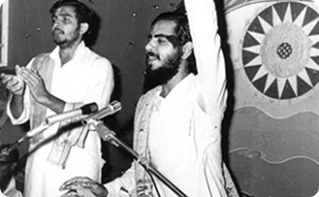
Shrimad Bhagavat Katha by Pujya Bhaishri is normally held for eight days. Pujya Bhaishri narrates the Katha in a story-telling manner and carefully explains the philosophy behind each story. He covers various issues and simplifies them with examples. His unique style of narration, chanting ślokas in rhythmic music, singing stutis and bhajans throughout the Katha makes it a unique devotional experience for all.
Shrimad Bhagavat Katha, like the holy river Ganga, has flowed to all parts of the world with the help of Pujya Bhaishri and touched the lives of millions across the globe. Kathas by Pujya Bhaishri are filled with the elixir of devotion (Bhakti rasa) along with the immense flow of knowledge (Gyan ganga), which the listeners drink in as nectar.
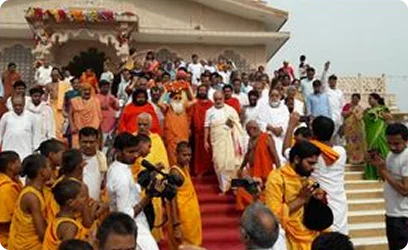
Before a katha, a procession with the holy book of Bhagavat led by musical chanting of God's name is carried out to the Katha venue in a grand manner to celebrate the beginning of an auspicious event.
Pujya Bhaishri then begins with a prayer called mangalaacharan, the significance of which is to attempt to focus our minds and senses in God's Katha from the material world.
Thereafter, Pujya Bhaishri commences the narration by describing the form of God via the shloka: 'Satchitaanand roopaaya'. This is followed by an explanation of the importance of listening to Bhagavat Katha with examples of stories of Dhundhukari and the encounter of Naradji with weeping Bhakti Maa and old and frail Gyan and Vairagya
Pujya Bhaishri begins the first chapter of Bhagavat with first shloka wirtten by Shri Ved Vyas ji which ends in ...Satyam Param Dhimahi', meaning, the description of the Supreme Truth.
He then briefly tells us:
Before a katha, a procession with the holy book of Bhagavat led by musical chanting of God's name is carried out to the Katha venue in a grand manner to celebrate the beginning of an auspicious event.
Pujya Bhaishri then begins with a prayer called mangalaacharan, the significance of which is to attempt to focus our minds and senses in God's Katha from the material world.
Thereafter, Pujya Bhaishri commences the narration by describing the form of God via the shloka: 'Satchitaanand roopaaya'. This is followed by an explanation of the importance of listening to Bhagavat Katha with examples of stories of Dhundhukari and the encounter of Naradji with weeping Bhakti Maa and old and frail Gyan and Vairagya
Pujya Bhaishri begins the first chapter of Bhagavat with first shloka wirtten by Shri Ved Vyas ji which ends in ...Satyam Param Dhimahi', meaning, the description of the Supreme Truth.
He then briefly tells us:
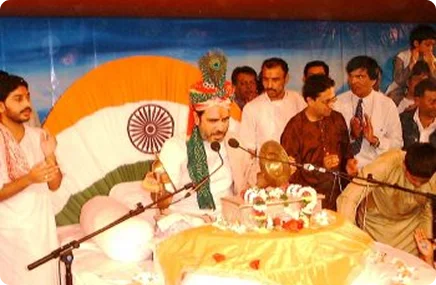
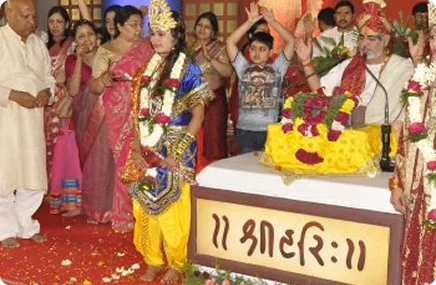
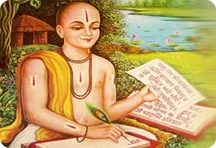
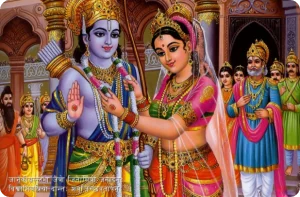
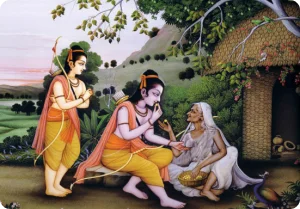
Shri Ram Katha is the story of Lord Ram, the seventh incarnation of Lord Vishnu. In His incarnation, Lord Ram teaches humanity and how to live the ideal life. Lord Ram is described as an embodiment of religious righteousness.
There are two main scriptures which cover the Story of Lord Ram’s life:
Shri Ram Katha is particularly relevant for modern times when there is a great need to emphasize the importance of the responsibility and good conduct highlighted in the glorification of Lord Ram in these two scriptures.
While Shri Valmiki ji’s Ramayan depicts Lord Ram as the highest among men, Tulsidas ji has written the text with the inherent faith and belief that Ram is the Supreme God.
Goswami Tulsidasji wrote Shri Ram Charit Manas poetically, in the Avadhi language so that it was easy to understand by all from the original narration by Sage Valmiki ji in Sanskrit language.
Shri Ram Charit Manas reflects Tulsidas ji’s views on life and religion. It is an immaculate combination of art and thought; it is devotion presented in a supremely aesthetic way. The language used is simple yet elegant and the choice of words show a love of rhyme and rhythm.
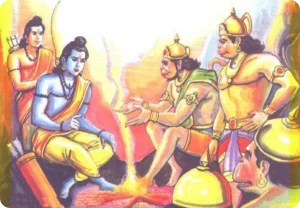
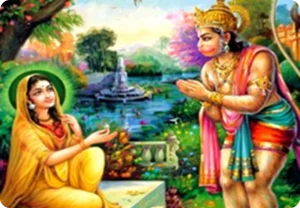
Each character in Shri Ram Charit Manas teaches us how to be an ideal son, brother, husband and perform our duties in life. Beginning with Lord Ram Himself, who is the perfect son, husband and king, Shri Lakshman ji is the ideal brother, Shri Sita ji is the ideal wife and daughter-in-law, Shri Bharatji is the ideal devotee and Shri Hanumanji the ideal server and devotee, the list is endless. Even Ravan is the perfect enemy and performs in that role till the end as he realises that Lord Ram is the Supreme God.
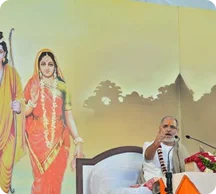
In his Ram Katha, Pujya Bhaishri beautifully unravels the verses of Shri Ram Charit Manas and explains the meanings in a simple manner that has inspired audiences all over the world.
Pujya Bhaishri elucidates the philosophies of Goswami Tulsidas ji and resurfaces the sketches of an ideal son, father, brother, mother, wife, king and queen, deeply touching the hearts of the listeners.
Shri Ram Katha is normally held for eight days and the birth of Shri Ram is celebrated with great fan and fervour.
Pujya Bhaishri says that Goswami Tulsidas ji’s epic is called Shri Ram Charit Manas because Lord Shankar created it and kept it in his heart. When the right time came, he narrated it to Parvati ji. Ramayan is Lord Ram’s temple where Lord Ram resides, hence we should keep it in our heart.
Tulsidas ji wrote Shri Ram Charit Manas for internal happiness. Tulsidas ji says, “Katha is a means to attain peace, provide relaxation to those who are tired, an inspiration and motivation to those who are demotivated and whose life has come to a halt.
Shri Ram Charit Manas contains seven chapters (kānd). Pujya Bhaishri says that these seven chapters are the seven days of our life in which no one day should go without God’s Katha. These seven chapters are also the seven stages in the journey of our life. We climb each to relax at the holy feet of Lord Ram.
Watch this video by Pujya Bhaishri taken from the discourse in Melbourne, Australia, where Pujya Bhaishri explains more about Shrimad Bhagavad Gita.
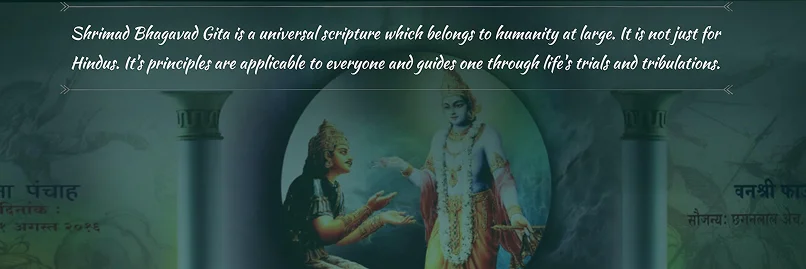
Shrimad Bhagavad Gita is one of the most important and sacred religious scriptures. It is the song sung by Lord Krishna. In Hinduism, Vedas are the main scriptures. At the end of the Vedas, there is a philosophical section called Vedānta. Shrimad Bhagavad Gita is the essence of Vedānta. It is philosophy presented in a poetic way. However, the word Hindu has not been mentioned in any verse in the Bhagavad Gita.
Great thinkers like Henry David Thoreau and Ralph Waldo Emerson understood the importance of Gita. It speaks of life on a universal level.
Shrimad Bhagavad Gita is also contained within the great epic scripture, Mahābhārat, when Arjun is filled with distress on the battlefield of Kurukshetra, where a war has been declared between the Kauravas and Pāndavas. Arjun faces the dilemma of encountering his near and dear on the battlefield and becomes despondent.
When Arjun becomes despondent, Shri Krishna spreads the nectar of Bhagavad Gita in a divine conversation between Him and Arjun. Through His beloved friend Arjun, Shri Krishna teaches the entire universe the path to wellbeing.
Lord Krishna’s instructions to Arjun have become a guide for all mankind and touch upon all aspects of human life. Shri Krishna teaches lessons on every angle of human existence and its problems, real and anticipated, in one’s life. In this divine conversation between Lord Krishna and Arjun, the Lord describes the science of self-realisation and the exact process by which a human being can establish an eternal relationship with God.
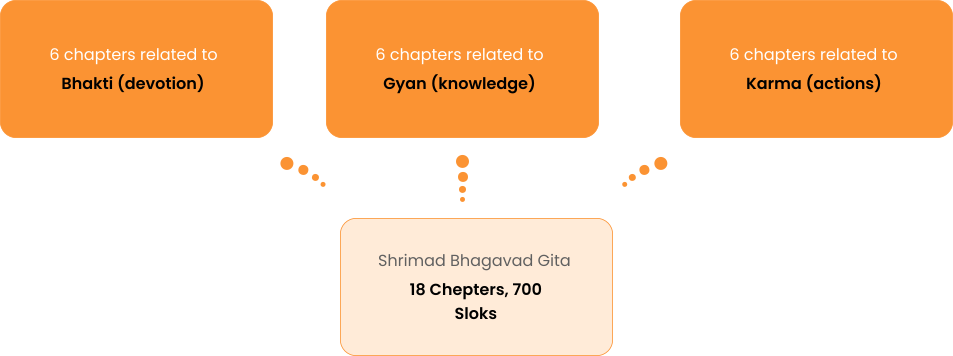
We live in these three chambers/ rooms in life, whether we are rich or poor:
The combination of these three makes our character.
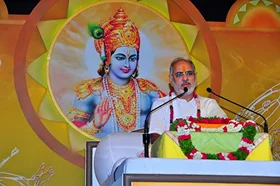
Shrimad Bhagavad Gita discourse by Pujya Bhaishri is normally held for five days. Pujya Bhaishri begins with the importance of Gita in our life and then focuses on one chapter.
Pujya Bhaishri is a scholar of Shrimad Bhagavad Gita and very often quotes ślokas from the Gita even when he narrates Shrimad Bhagavat Katha and Shri Ram Katha.
He says that the situation of the battlefield in Bhagavad Gita is replicated in our life. Life is a battlefield in which we fight at every moment. Arjun’s hesitation to pick up his arms is simply the weakness of the mind. This is the condition of Arjun who resides within each one of us.
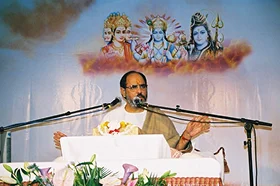
In the battlefield of life, sometimes there are moments when we are at a complete loss of knowing what we must do. Each one of us has to fight our own war. However, we are not on our own; God is with us. With God as our charioteer holding the five reins of our five horses, meaning senses, He guides us to win our wars. The Lord will not pick up any arms, the battle is our own. God sings this song to rid us of our grief, to teach us our duties and fill our life with bliss, happiness and inner peace.
Pujya Bhaishri is invited to give other Kathas and discourses in addition to Shrimad Bhagavat Katha, Shri Ram Katha and Shrimad Bhagavad Gita, throughout the year. They could be on a specific topic or related to an occasion.
Pujya Bhaishri expounds the characters of Lord Shiv and Shri Hanuman ji in Shiv Charitra Katha and Shri Hanumant Charitra Katha respectively wherein their greatness is learnt through their various stories of strength, perseverance, knowledge and devotion.
Pujya Bhaishri has also spoken on themes like Gopi Geet, Raas Panchādhyāyee, Bhishma Stuti and Gau Katha for many years.
Pujya Bhaishri has addressed the prisoners of Tihar jail in India and the army at our borders, an audience at the National Space Centre, UK and Wharton University in the USA. Young or old, people relate to his teachings and anecdotes. Question and answer sessions are often held, especially for young people to discuss their queries.
Shrimad Bhagavat was written by Shri Ved Vyas ji, as the essence of Vedas and Upanishads (the origin of our scriptures) written by our Rishis, were difficult for common people to understand.
Below are brief details of what is entailed and a few learning points from each katha and discourse.
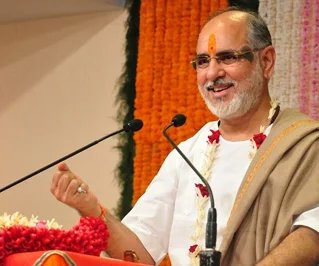
Hanumant Charitra Katha, Kolkata, 2016
Held over five days, here are some extracts of what Pujya Bhaishri teaches about Hanumanji in the Hanumant Charitra Katha:
Shri Hanumanji had no other desire in life than to surrender at the lotus feet of Lord Ram. Everything else was insignificant to him. He who is ready to abandon all pleasures automatically rids himself of all the pains of life.
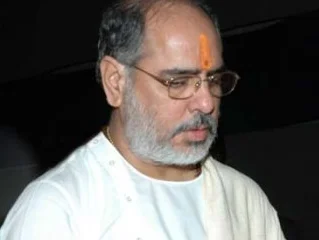
Gopi Geet, New Jersey, 2009
Gopi Geet is the song sung by the Gopis to express their pain of separation from Lord Krishna.
Pujya Bhaishri elucidates the significance of Gopi Geet with specific emphasis on the 19 ślokas (verses) from the 28th Chapter of the 10th canto of Shrimad Bhagavat written by Shri Ved Vyasji. Gopi Geet is the supreme highlight of Shrimad Bhagavat.
Raas Panchadhyayee is the life source of Shrimad Bhagavat. Raas means to experience nectar. Krishna is no different from this divine nectar and we only experience Raas when we make the effort of coming closer to Shri Krishna. Even if we have a little appreciation for Shri Krishna, we can be blessed with the Raas.
Pujya Bhaishri describes the philosophical symbolism behind each of Lord Krishna’s attributes and features, from his flute to the colour of his clothes. Each fine detail has a deeper meaning.
This Great Prayer, Bhishma Stuti that occurs in Mahabharata, was sung in 11 ślokas by Pitamaha Bhishma who lies on a bed of arrows in the battlefield of Kurukshetra. Pitamaha (grandsire) Bhishma was a great warrior and grandfather to Pandavas and Kauravas and above all was a devotee of Lord Krishna. Pujya Bhaishri elucidates on this stuti by Pitamaha Bhishma describing the valour and true friendship of Lord Krishna and educates us on what the message is behind the Stuti.
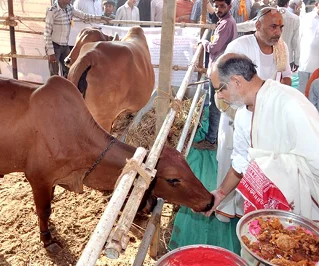
Gau Katha, Ahmedabad, 2013
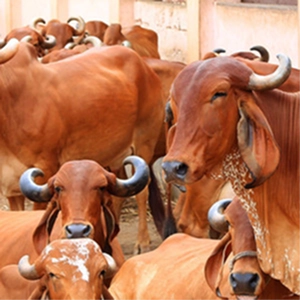
In this Katha, carried out once in Ahmedabad in 2013, Pujya Bhaishri explains the importance of cows based on scientific and spiritual knowledge provided in our scriptures.
Pujya Bhaishri says, “Cow is the mother of the entire universe. Cows nourish and protect all beings, be one of any religion, caste or creed”.
God says, “I, myself, reside in cows”. Hence whenever we get the opportunity, we must dedicate our services to cows. Providing our services to cows leads to increase in our wealth, fame and purifies our mind. Above all, we acquire love for Lord Krishna.
Watch this video on Pujya Bhaishri’s thoughts shared about the youth in Badrinath Katha 2016.
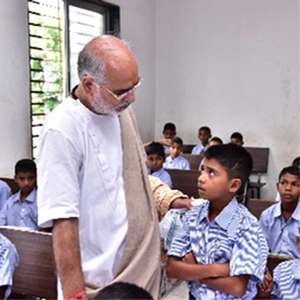
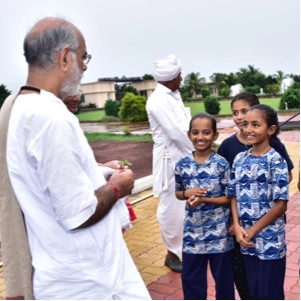
Pujya Bhaishri has always been very fond of teaching young people. It is his belief that they are the future torchbearers of our culture and values.
Pujya Bhaishri takes every opportunity to interact with youth in various ways, such as question and answer sessions, visiting them in schools and colleges or through two to three-day shibirs/ camps organised as a residential retreat, to guide them through modern-day challenges.
The Shivir is intended to allow our children to spend time in the company of Pujya Bhaishri and their peers to discuss everyday issues and how Sanatan Dharma and our scriptures can guide them in their daily lives.
During the Shibirs, several topics are discussed including positive thinking, diversity and integrating spirituality into their everyday lives. Various activities also take place such as Yoga, games, dramas, garbas, and singing.
In the 2008 UK Youth Shivir, Pujya Bhaishri said, “When we are children, we are in harmony because we behave according to our emotions. As we grow up, we cease to listen and act according to our emotions and lose that peace. There was a time we knew only laughter and love all around. As we grow up and experience more of the material life, we discover hate and bitterness. As a result, we lose harmony.”
“Dharma (Religion) shows us how to live life with melody and harmony.We can learn to enjoy life while maintaining our Dharma, traditions, principles and values – our true identity. If we lose these, then we cannot find true happiness, true peace.” Comments from attendees of the Shivir include:
“It’s difficult to describe in a few words what I have gained from the Shivir. Pujya Bhaishri’s open mind and loving culture guided us through some of life’s difficult questions in a simple and straightforward way.”
“This experience was even more fulfilling as I shared it with an inspiring group of people of different ages and backgrounds that encouraged me to think with a wider perspective.”
Watch Question and Answer Session with Pujya Bhaishri in Bangkok Shivir 2016.
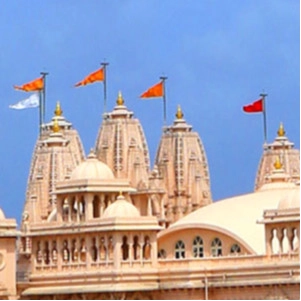
Visiting places of pilgrimage in India and paying obeisances to the Gods and Godesses has always been very significant.
Pujya Bhaishri has undertaken many such yatras to tirthas (holy places which include holy rivers) and dhāmas (pilgrims of devotion) often combining them with Kathas. Hundreds of devotees have joined him to pay respects at these pilgrimages, participate in the Kathas and therefore had the most memorable as well as divine times. The first Yatra Pujya Bhaishri undertook was to Gangortri in 1990.